Introduction
Construction projects require reliable access systems that can support workers and materials at different working heights. Whether it is a commercial building, an industrial facility or a large construction development, selecting the right scaffolding system is essential. Cuplock scaffolding in South Africa is a popular option for projects that require a modular steel access structure. Contractors looking for a suitable Cuplock scaffolding system for sale or hire can explore different configurations according to their project requirements.
But what makes Cuplock scaffolding suitable for different construction applications? Understanding its components, uses and selection considerations can help contractors make more informed decisions.
What Is Cuplock Scaffolding?
Cuplock scaffolding is a modular steel scaffolding system that uses a specialised cup-and-blade connection mechanism to connect horizontal and vertical scaffold members.
The connection arrangement allows compatible components to be assembled into different scaffold configurations. This makes the system useful for projects where access structures need to be adapted to building dimensions, working heights and site conditions.
Unlike conventional arrangements that may require several individual couplings, the Cuplock connection system is designed to simplify the joining of compatible components.
It is commonly considered for:
- Commercial building construction
- Industrial maintenance
- Infrastructure developments
- Building renovation projects
- External façade work
- Large-scale construction sites
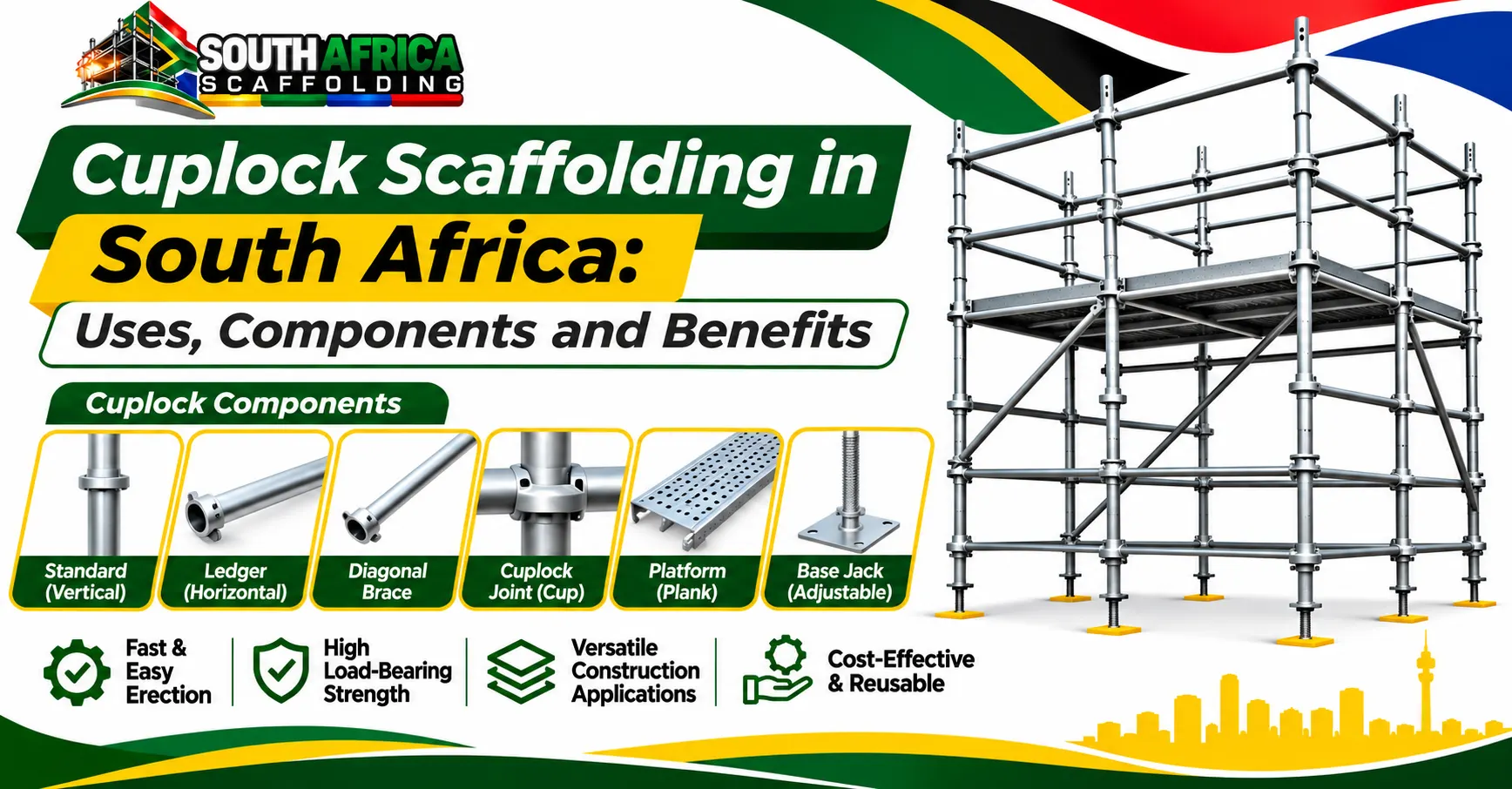
Main Components of a Cuplock Scaffolding System
Standards
Standards are the vertical steel members that form the main supporting structure. They transfer the loads through the scaffold towards its foundation.
Ledgers
Ledgers are horizontal members that connect the vertical standards. They provide structural support and help maintain the required scaffold arrangement.
Transoms
Transoms are horizontal cross-members positioned across the scaffold structure. They support the working platform and help maintain the required configuration.
Scaffold Bracing
Bracing helps provide stability and resist lateral movement. Its arrangement should follow the scaffold design and applicable technical requirements.
Working Platforms
Platforms provide the working surface for personnel carrying out construction, installation or maintenance activities. The platform components must be compatible with the selected scaffold system.
For example, contractors should consider suitable steel scaffolding planks when planning a compatible working platform.
Benefits of Cuplock Scaffolding for Construction Projects
Choosing an appropriate scaffolding arrangement can improve site organisation and provide practical access for different construction activities.
Modular Design
One of the main advantages of Cuplock scaffolding is its modular configuration. Compatible components can be assembled into different arrangements according to the project layout.
This flexibility makes it suitable for selected commercial, industrial and infrastructure applications.
Efficient Assembly
The cup-style connection mechanism is designed to make joining compatible scaffold members more straightforward. This can help organise assembly activities when the system is installed by trained and competent scaffolders.
Suitable for Larger Projects
Steel Cuplock systems can be considered for projects that require substantial temporary access structures, including commercial buildings and industrial facilities.
The final configuration must always be determined by the project requirements and an appropriate scaffold design.
Adaptable Configurations
Construction sites rarely have identical layouts. Different building dimensions, access requirements and working areas may require different scaffold arrangements.
A modular system can provide flexibility when suitable components and properly designed configurations are selected.
Reusable Components
When maintained, inspected and stored correctly, compatible scaffold components can be reused for suitable future projects. Regular inspection is important to identify damaged, deformed or deteriorated parts.
Where Is Cuplock Scaffolding Used in South Africa?
Different industries require temporary access systems for construction and maintenance work.
Commercial Building Construction
Commercial buildings often require access for structural work, façade activities, plastering, painting and finishing. Cuplock scaffolding in South Africa can be considered where a modular steel access arrangement suits the building design.
Industrial Facilities
Factories and industrial facilities may require temporary access for equipment installation, inspections and maintenance. The selected scaffold must account for the working environment, loading requirements and surrounding operations.
Infrastructure Projects
Certain infrastructure developments require access systems for construction, repair and maintenance activities. Scaffold design should consider the structure, ground conditions and intended work.
Renovation and Building Maintenance
Building renovations can involve work at different heights, including exterior repairs, painting and other maintenance activities. The correct scaffold arrangement depends on the access requirements and available working space.
How to Choose the Right Cuplock Scaffolding System
Before purchasing or hiring Cuplock scaffolding, contractors should evaluate several important factors.
- Project dimensions: Consider the building dimensions, working height and areas that require access.
- Load requirements: Determine the expected loads, including workers, tools and construction materials. Never estimate load capacity without reference to the system specifications and scaffold design.
- Site conditions: Check the ground conditions, available space, surrounding structures and potential environmental hazards.
- Component compatibility: Ensure that all standards, ledgers, transoms, platforms and accessories are compatible with the selected system.
- Purchase or rental: Buying may be suitable for companies with regular scaffolding requirements, while hiring can be practical for temporary projects.
- Supplier support: Discuss the required components, quantities, specifications and delivery arrangements before placing an order.
Scaffolding Safety Requirements in South Africa
Safety should be considered throughout the selection, erection, inspection, use and dismantling of a scaffold.
South Africa’s Construction Regulations, 2014, include specific provisions relating to scaffolding. Regulation 16 requires contractors to appoint a competent person in writing to supervise scaffolding operations and ensure that scaffold erectors, team leaders and inspectors are competent.
Contractors should also ensure that access scaffolding complies with the applicable incorporated safety standards.
Important site considerations include:
- Have scaffolding work supervised by a competent appointed person.
- Use trained and competent scaffold erectors.
- Inspect scaffold components before assembly.
- Ensure suitable foundations and base arrangements.
- Install required bracing and edge protection.
- Follow the approved scaffold design and loading limitations.
- Restrict access to incomplete or unsafe scaffold sections.
- Carry out inspections in accordance with applicable requirements.
For the official regulatory reference, consult the South African Government’s Construction Regulations under the Occupational Health and Safety Act.
For additional site protection, contractors can also consider appropriate scaffolding safety equipment, selected according to the work activities and assessed hazards.
Important: This article is general information, not a substitute for a competent person’s scaffold design, inspection or interpretation of applicable legal requirements.
Cuplock Scaffolding for Sale and Hire in South Africa
Choosing between purchasing and hiring depends on the frequency of use, project duration, storage arrangements and budget.
For contractors working on regular construction projects, purchasing may offer long-term value. For temporary projects or occasional requirements, hiring can help avoid the costs associated with long-term equipment ownership.
South Africa Scaffolding supplies Cuplock scaffolding for sale and hire, with enquiries welcomed from contractors and businesses across South Africa.
When requesting a quotation, provide:
- Project location
- Required scaffold configuration
- Approximate working height
- Required components
- Estimated quantities
- Purchase or rental preference
- Project duration, if hiring
Providing accurate information helps the supplier review the requirements and identify available options.
Frequently Asked Questions
What is Cuplock scaffolding used for?
Cuplock scaffolding is used for suitable construction, commercial, industrial, infrastructure and maintenance applications requiring modular temporary access structures.
Is Cuplock scaffolding suitable for large construction projects?
It can be suitable for larger projects when the system is properly designed, configured and installed according to the project requirements and applicable safety standards.
Can I buy or hire Cuplock scaffolding in South Africa?
Yes. South Africa Scaffolding offers both sale and hire options. Availability depends on the required components, quantities and project location.
What are the main components of Cuplock scaffolding?
The main components include standards, ledgers, transoms, bracing and compatible working platforms.
How do I determine the quantity of Cuplock scaffolding required?
The quantity depends on the building dimensions, working height, scaffold configuration and design requirements. A competent person should determine the required arrangement and quantities.
Get Cuplock Scaffolding for Your Next Project
Are you planning a commercial construction, industrial maintenance or infrastructure project?
South Africa Scaffolding can help you explore suitable Cuplock scaffolding solutions in South Africa for purchase or rental.
Share your project location, required components and approximate working height to discuss available options and request a quotation.
Choose the right scaffolding equipment to support your project’s access requirements.
In this guide
- Introduction
- What Is Cuplock Scaffolding?
- Main Components of a Cuplock Scaffolding System
- Benefits of Cuplock Scaffolding for Construction Projects
- Where Is Cuplock Scaffolding Used in South Africa?
- How to Choose the Right Cuplock Scaffolding System
- Scaffolding Safety Requirements in South Africa
- Cuplock Scaffolding for Sale and Hire in South Africa
- Frequently Asked Questions
- Get Cuplock Scaffolding for Your Next Project
Need a Cuplock?
Just tell us the quantity and delivery location.