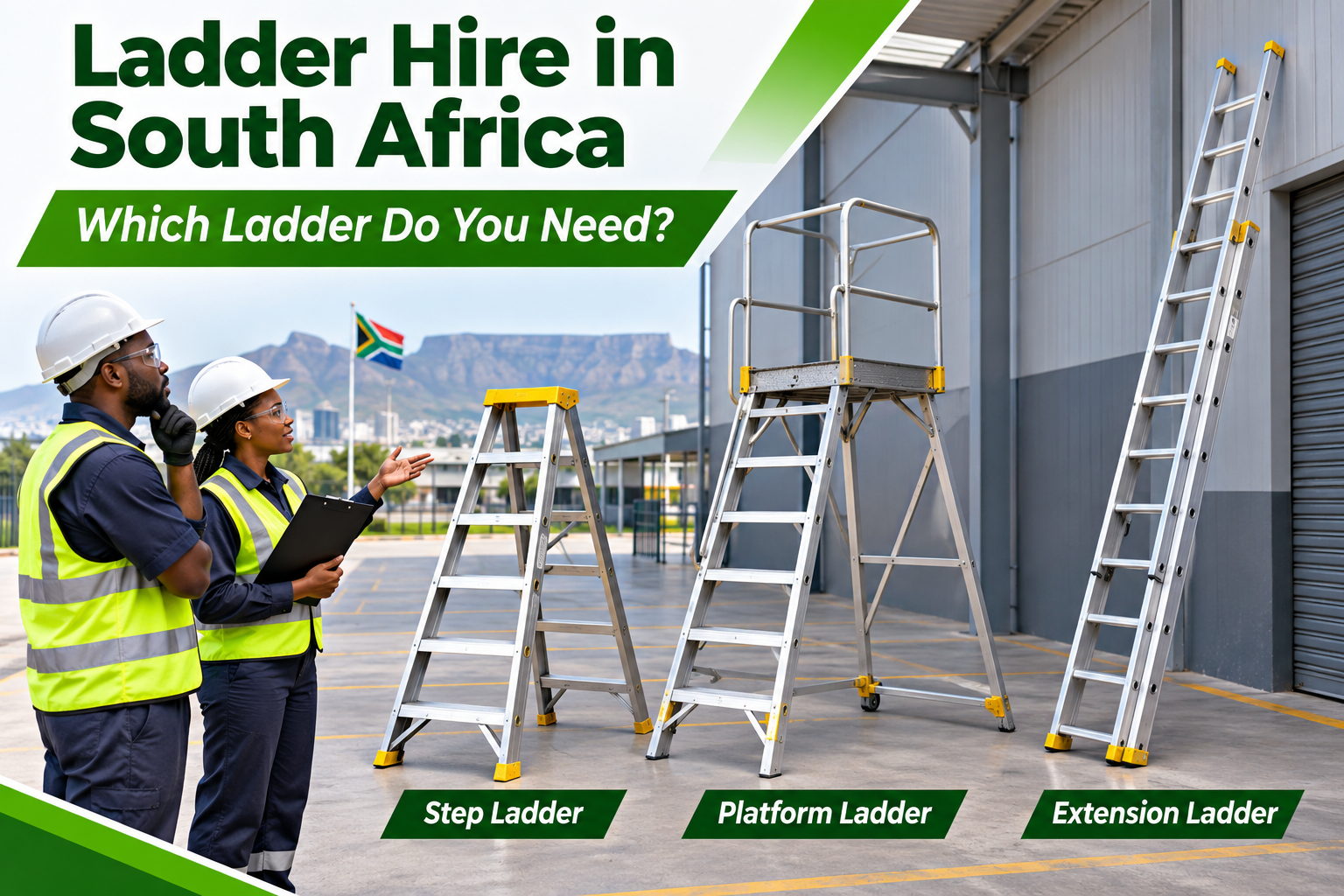
Introduction
Choosing the right ladder is important for completing maintenance, construction, installation and repair work safely. Different jobs require different ladder designs, heights and materials.
A step ladder may be suitable for indoor maintenance, while an extension ladder can provide access to higher areas. Fibreglass ladders are commonly selected for certain electrical work, and aluminium ladders offer lightweight access for many general applications.
If you are searching for ladder hire in South Africa, understanding these differences can help you select suitable equipment for your project.
This guide explains the common ladder types, their uses and the factors to consider before hiring a ladder from a supplier.
Why Choose Ladder Hire for Your Project?
Buying a ladder may not always be practical, especially when equipment is needed for a short term job.
Some benefits include:
Lower Initial Investment
Hiring avoids the upfront cost of purchasing equipment for a temporary requirement.
Flexible Equipment Options
You can enquire about different ladder types according to the height and nature of your work.
No Long Term Storage Requirement
Once the project is complete, the hired ladder can be returned according to the agreed rental terms.
Suitable for Different Projects
Ladder hire can support painting, maintenance, installation, warehouse operations and construction related access tasks.
Practical for Occasional Use
Homeowners and businesses can hire equipment when they need it rather than purchasing a ladder for occasional work.
Types of Ladders Available for Hire in South Africa
Different ladder designs serve different purposes. Before hiring, consider the working height, access conditions and type of task.
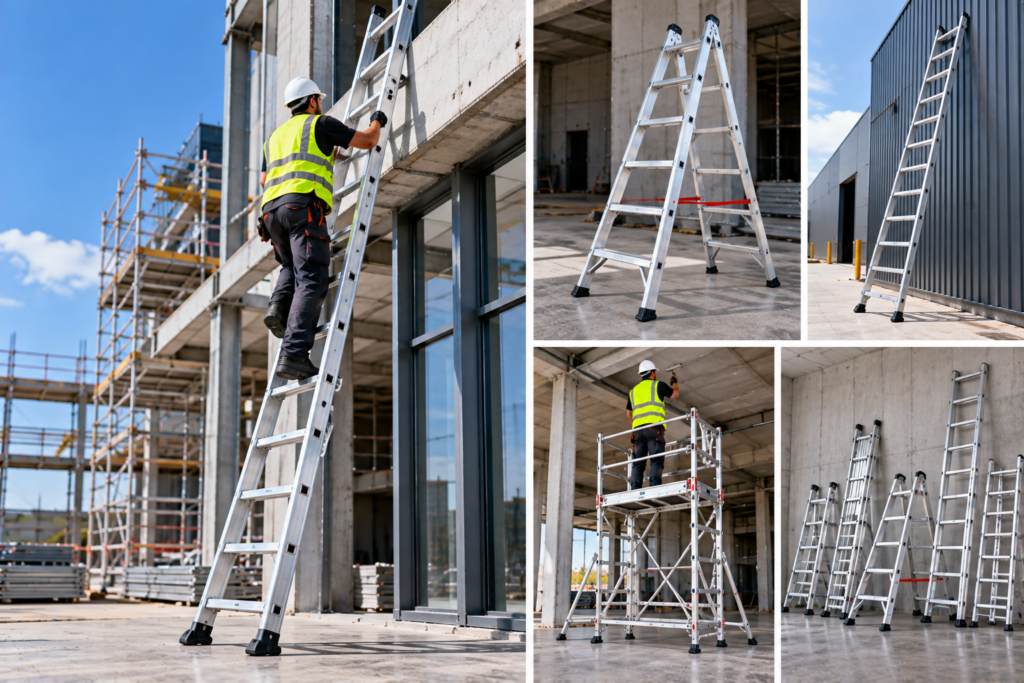
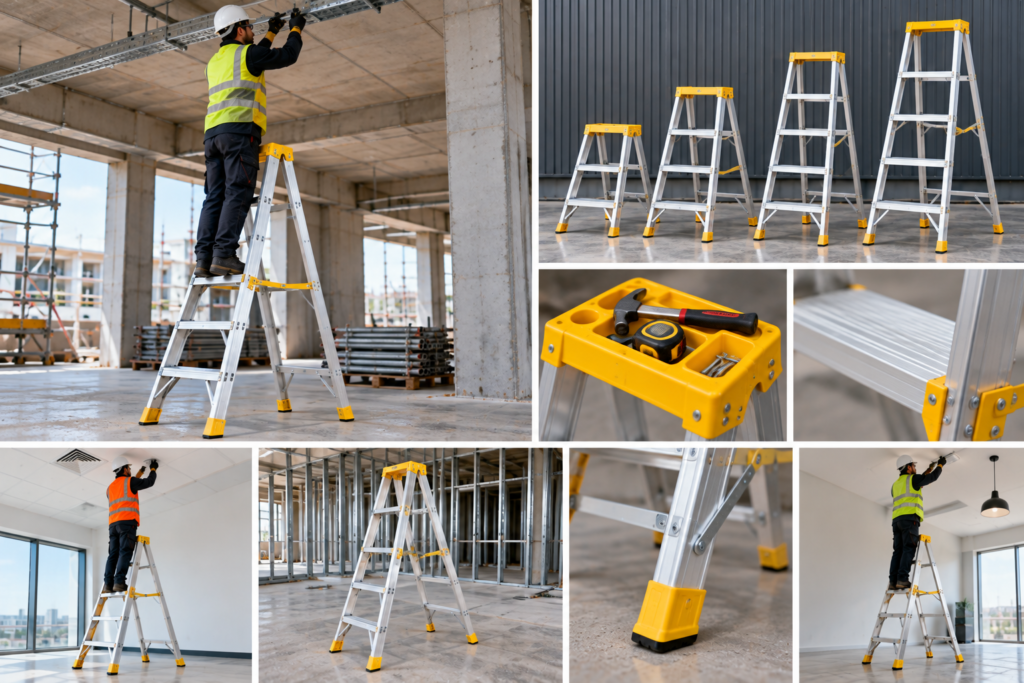
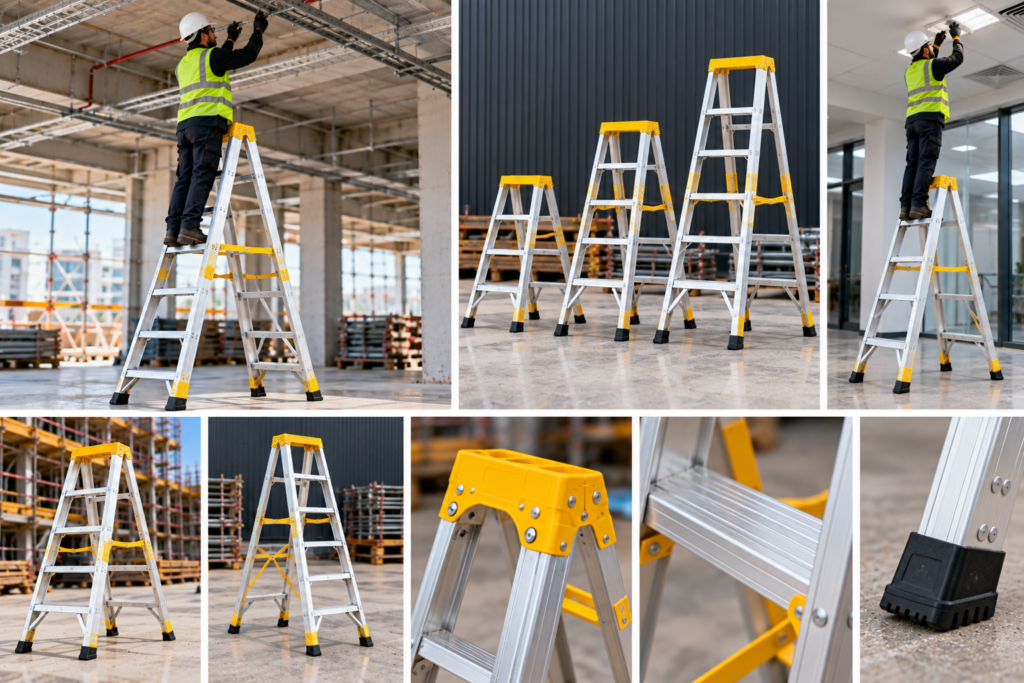
An aluminium scaffolding ladder provides lightweight access for construction, scaffolding and maintenance activities. Its aluminium construction makes it easier to handle and transport between working areas. It may be a practical option for contractors who need portable access equipment.
- Construction and building work
- Scaffolding access
- General maintenance
- Installation activities
- Regular site work
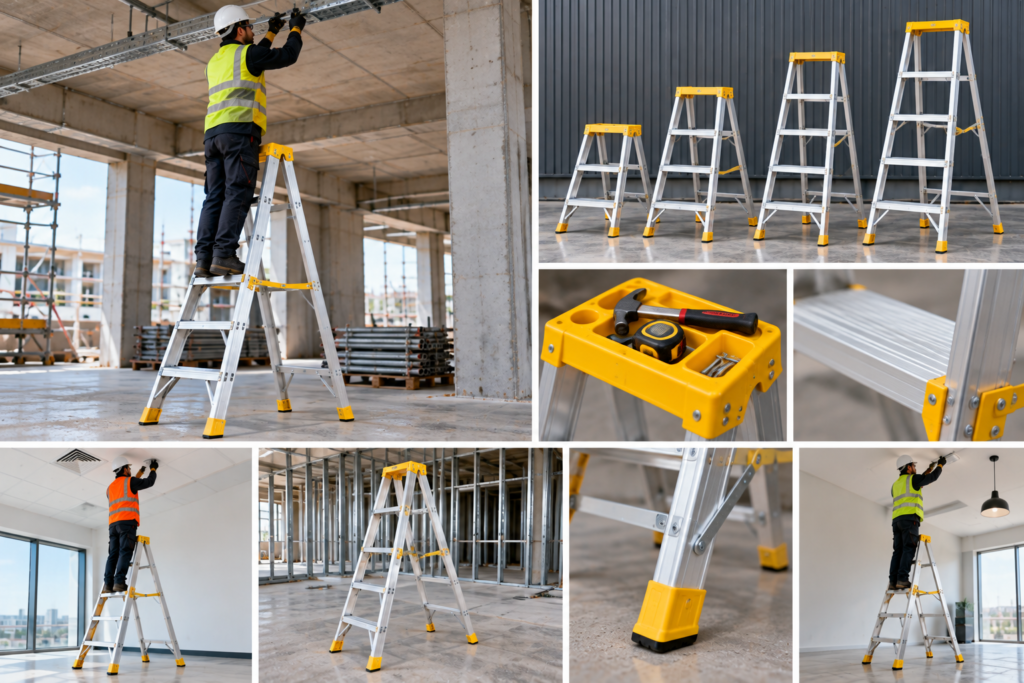
A step ladder is a self supporting ladder that opens into an A shaped configuration. It does not need to lean against a wall for support. It is commonly used for indoor and outdoor maintenance tasks where a suitable standing surface is available, and is useful for tasks that require convenient access at lower working heights.
- Painting and decorating
- Changing light fittings
- Indoor maintenance
- Electrical installation, where the ladder material is suitable
- Stock handling
- General repair work
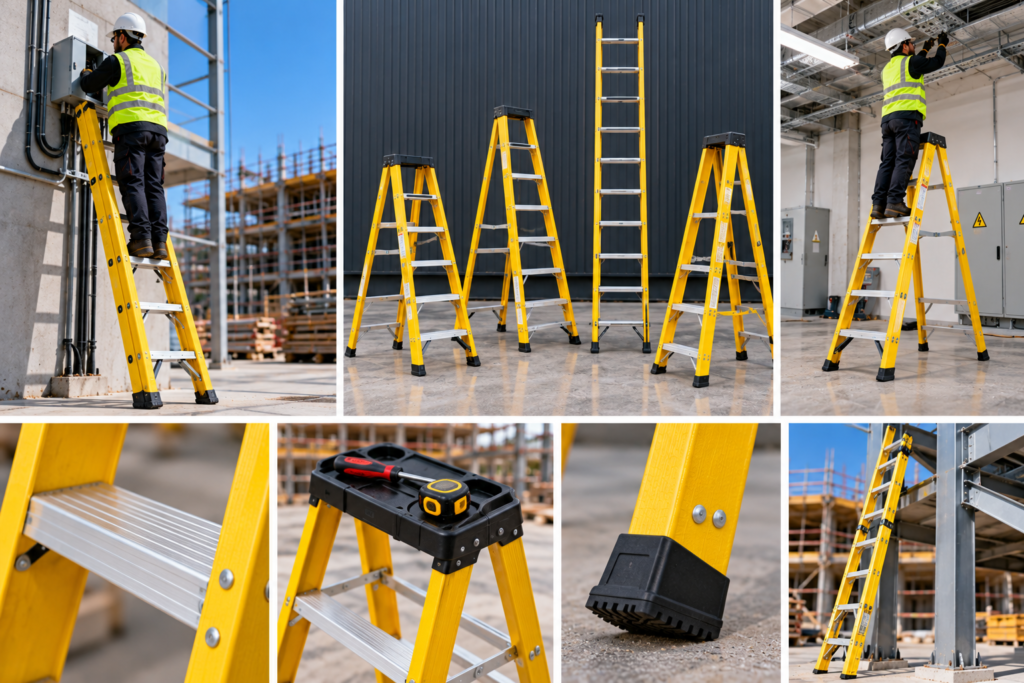
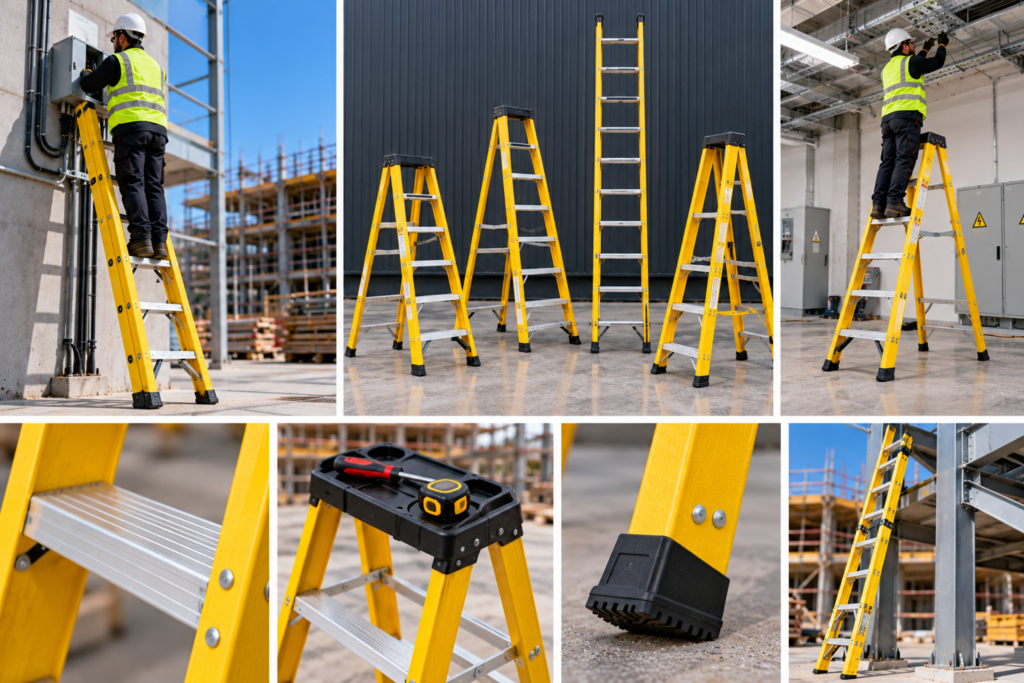
Fibreglass ladders are commonly selected for electrical and maintenance work because their fibreglass side rails are non conductive. They can be a suitable option when working around electrical hazards, provided the ladder is in good condition and the correct electrical safety procedures are followed. A fibreglass ladder does not remove electrical risks. Workers must still maintain safe distances and isolate electrical equipment wherever possible.
- Electrical maintenance
- Inspection work
- Industrial installation
- Facility maintenance
- General trade work
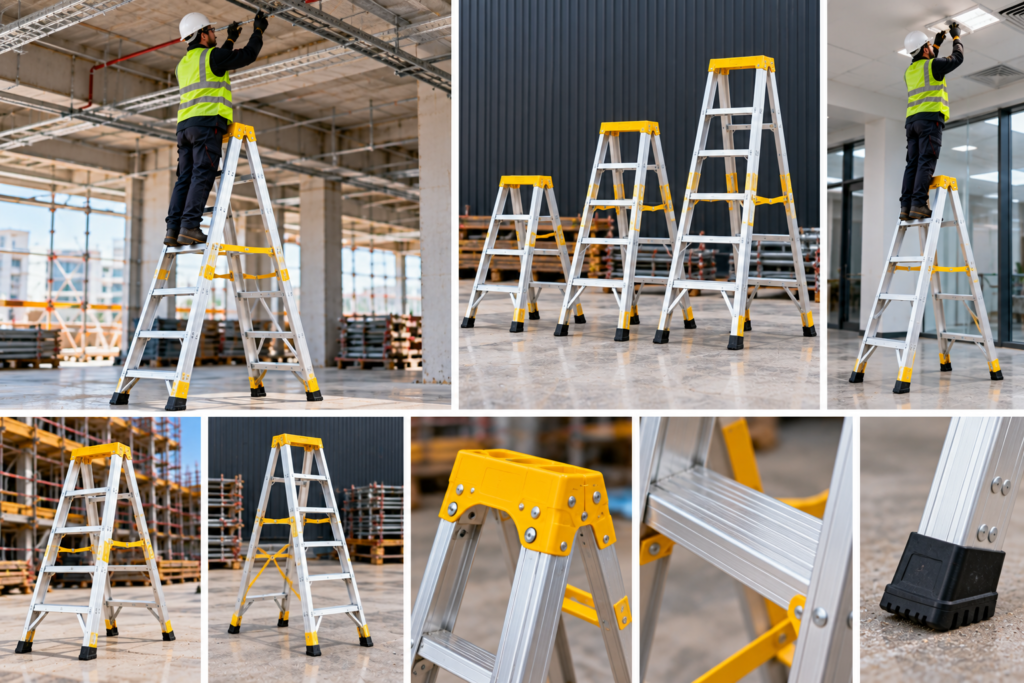
An A type ladder is a self supporting ladder with two sections that open into a stable standing arrangement. It is useful when there is no suitable wall or structure against which to position a leaning ladder. Always open the ladder fully and lock its spreaders before use.
- Painting
- Building maintenance
- Construction work
- Installation activities
- General repairs
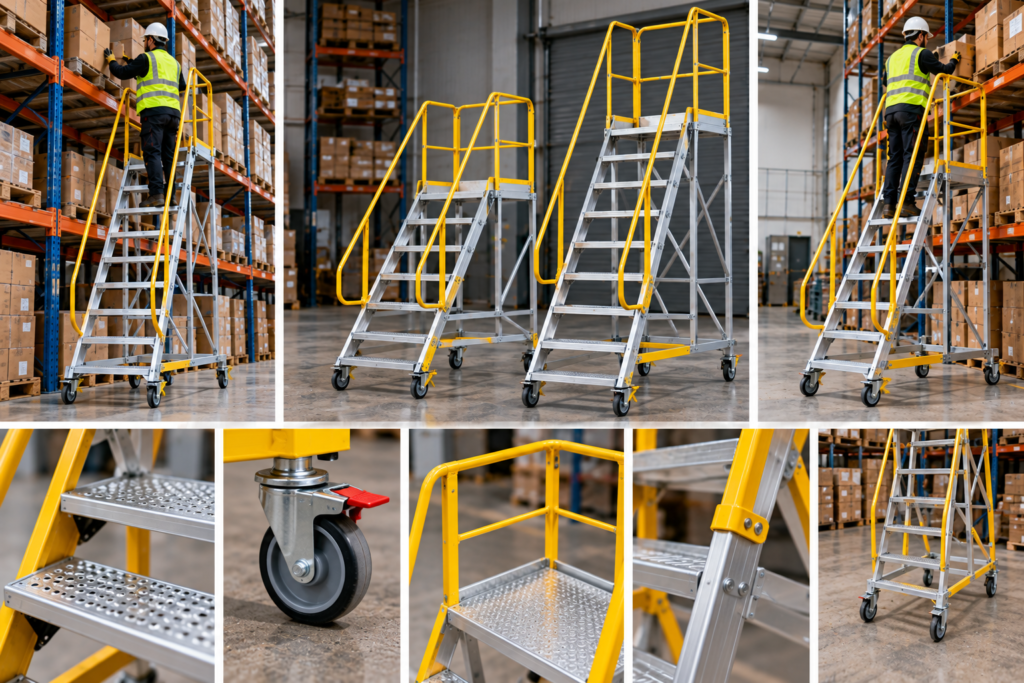
Warehouse rolling ladders are designed to provide access to elevated storage areas and shelving systems. Depending on the model, they may include steps, handrails, a standing platform and wheels for repositioning. Check the manufacturer’s instructions for wheel locking and movement before using this equipment.
- Warehouse stock picking
- Inventory inspections
- Retail storage access
- Distribution facilities
- Maintenance of elevated shelving
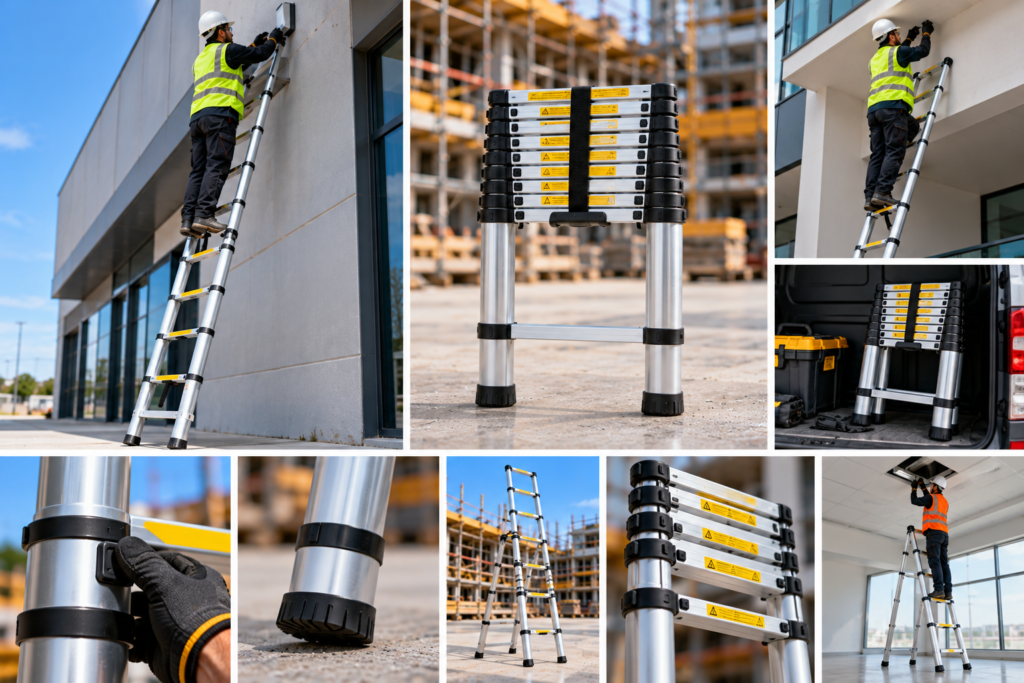
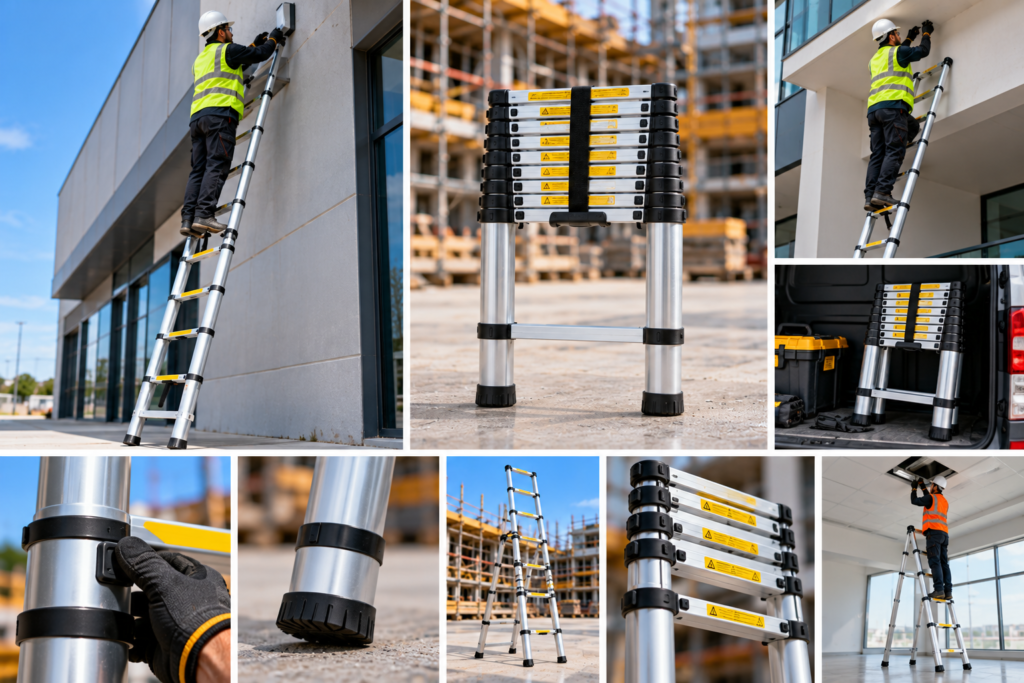
A telescopic ladder has sections that extend and retract, allowing it to be stored in a compact form. It can be useful for workers who need portable access equipment that is easier to transport between locations. Always check that every locking mechanism is correctly engaged before climbing.
- Property maintenance
- Inspection work
- Installation tasks
- General access requirements
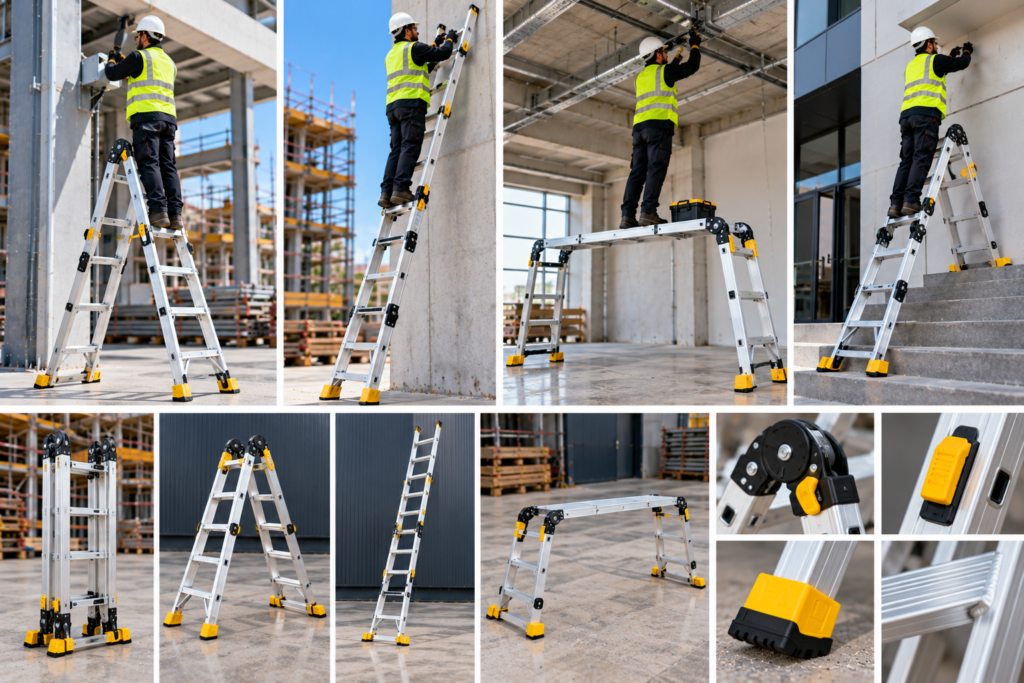
A multipurpose ladder is designed to work in different configurations, depending on its model and manufacturer’s instructions. Some models can be arranged as an A frame ladder or an extension ladder. Check the approved configurations and load rating before use.
- Home maintenance
- Construction work
- Painting
- Installation
- General repair tasks
Which Ladder Should You Hire for Your Project?
The right ladder depends on the working height, environment and nature of the task.
| Project or Work Activity | Ladder Type to Consider | Main Advantage |
|---|---|---|
| Indoor painting | Step ladder | Self supporting access |
| Electrical maintenance | Suitable fibreglass ladder | Non conductive side rails |
| General construction | Aluminium scaffolding ladder | Lightweight handling |
| Warehouse stock access | Warehouse rolling ladder | Convenient access to shelving |
| Outdoor maintenance | Suitable extension or multipurpose ladder | Adjustable reach, depending on model |
| Home repairs | Step or multipurpose ladder | Flexible access |
| Industrial maintenance | Ladder selected for the specific hazard and task | Application specific suitability |
This is a general selection guide. A ladder is not automatically suitable for every job in its category. A risk assessment should determine the correct equipment.
Aluminium vs Fibreglass Ladders: Which Is Better?
Aluminium and fibreglass ladders are both used for professional access work, but they have different properties.
| Comparison Factor | Aluminium Ladder | Fibreglass Ladder |
|---|---|---|
| Material | Aluminium | Reinforced fibreglass |
| Electrical conductivity | Conductive | Non conductive when clean, dry and undamaged |
| Weight | Generally lighter | Generally heavier |
| Handling | Easy to transport | Can require more effort |
| Common applications | General maintenance and construction | Electrical and industrial maintenance |
| Corrosion | Resistant under normal conditions | Does not rust |
| Selection priority | Portability and general access | Electrical hazard considerations |
Choose an aluminium ladder for suitable general access tasks where electrical hazards have been assessed and metal equipment is appropriate.
Consider a suitable fibreglass ladder when electrical hazards are present. However, never rely on ladder material alone to protect against electric shock.
What Should You Check Before Hiring a Ladder?
Before arranging ladder hire in South Africa, consider these important factors.
Required Working Height
Identify the height of the task and choose a ladder that provides appropriate access without unsafe reaching.
Type of Work
Explain whether the ladder will be used for painting, electrical work, construction, warehouse operations or maintenance.
Ladder Material
Choose a suitable material for the working environment. For example, avoid conductive aluminium ladders where contact with exposed energised electrical equipment is possible.
Load Capacity
Check the manufacturer’s rated capacity. Include the weight of the worker, tools and any materials.
Working Space
Measure the available space and consider whether the ladder can be positioned safely without blocking doors, walkways or access routes.
Ladder Condition
Inspect the side rails, rungs, feet, locking mechanisms and other components before use.
Rental Duration
Confirm whether the ladder is needed for a day, a week or a longer project period.
Availability and Delivery
Ask the supplier to confirm the ladder model, quantity, hire availability, collection or delivery arrangements and rental charges.
Ladder Safety Tips for South African Worksites
Safe ladder use begins with selecting suitable equipment and following the manufacturer’s instructions.
Keep these points in mind:
- Inspect the ladder before every use.
- Do not use ladders with damaged rails or missing rungs.
- Check that anti slip feet are in good condition.
- Position the ladder on a firm and level surface.
- Secure leaning ladders against movement.
- Fully open self supporting ladders and lock the spreaders.
- Maintain three points of contact when climbing.
- Face the ladder when ascending and descending.
- Do not overreach from the ladder.
- Keep tools secured to prevent falling objects.
- Do not place ladders on boxes, tables or unstable surfaces.
- Keep ladders away from exposed electrical hazards unless the equipment is specifically suitable for the risk.
Ladders should only be used for tasks for which they are suitable. Where a task requires prolonged work, heavy materials or a larger working platform, consider a suitable scaffold tower or other access system.
South Africa’s Occupational Health and Safety General Safety Regulations, Regulation 13A, require ladders to be suitable for their intended purpose, stable and free from specified damage. The regulations also address securing ladders and preventing tools or objects from falling.
Pair your ladder with the right safety items, such as safety helmets and gloves.
When Should You Choose a Scaffold Tower Instead of a Ladder?
Not every elevated task is suitable for ladder access.
A scaffold tower may be more appropriate when workers need a larger working platform, more space for tools or access across a wider area.
Consider a scaffold tower for:
- Extended painting and finishing work
- Ceiling installation
- Larger maintenance tasks
- Repeated work at the same elevated level
- Tasks requiring more working space
South Africa Scaffolding also offers aluminium mobile towers, foldable towers, podiums and steel scaffolding options.
Explore the Aluminium Scaffolding Range to compare suitable access equipment.
Ladder Hire Across South Africa
South Africa Scaffolding supplies ladders for sale and hire enquiries across South Africa.
Its ladder range includes aluminium scaffolding ladders, step ladders, fibreglass ladders and A type ladders, along with other access options.
The company serves customers in major locations including:
Hire availability depends on the ladder type, quantity and current stock.
When requesting a quotation, provide your project location, required ladder type, working height, quantity and expected rental period. This helps the supplier check suitable options.
Visit the Ladders page or contact South Africa Scaffolding to discuss your requirements.
Conclusion
Choosing the right ladder makes a difference to access, convenience and workplace safety.
Before arranging ladder hire in South Africa, assess your working height, task, environment and equipment requirements.
Need a ladder for your next project?
Contact South Africa Scaffolding to discuss your project and check the available ladder hire options.
Frequently Asked Questions
You can contact South Africa Scaffolding for ladder hire enquiries across South Africa. Share your location, required ladder type, working height and rental period to check availability.
Common options include aluminium scaffolding ladders, step ladders, fibreglass ladders and A type ladders. Other configurations may be available depending on current stock.
A suitable fibreglass ladder is generally preferred where electrical hazards are present because its fibreglass side rails are non conductive. Electrical isolation and safe working procedures are still essential.
Yes. Aluminium ladders can be suitable for many construction and maintenance access tasks, provided the ladder is correctly selected and electrical hazards have been assessed.
Both terms commonly describe self supporting ladders that open into an A shaped arrangement. The exact design and features depend on the model.
Yes. Short term hire can be practical for temporary maintenance, painting, installation and construction requirements. Confirm the available rental period with the supplier.
Check the ladder type, working height, load rating, material, condition, locking mechanisms and suitability for the working environment.
A ladder may not be the best option for prolonged or demanding tasks. Consider a suitable scaffold tower or another working platform after assessing the task and associated risks.
South Africa Scaffolding lists warehouse rolling ladders in its product range. Contact the company to confirm the current model, quantity and hire availability.
The company accepts ladder enquiries across South Africa and lists major service locations including Cape Town, Pretoria, Durban, Bloemfontein and Gqeberha. Confirm delivery and availability for your specific location.
In this guide
Need a ladder?
Tell us the ladder type, working height, quantity and hire period.
Our ladders
Need more platform?
For longer jobs, a scaffold tower gives a safer working platform.
Ladders for sale and hire
Need a ladder for your project?
Share your location, ladder type, working height and hire period, and we will confirm availability with a clear quote.